
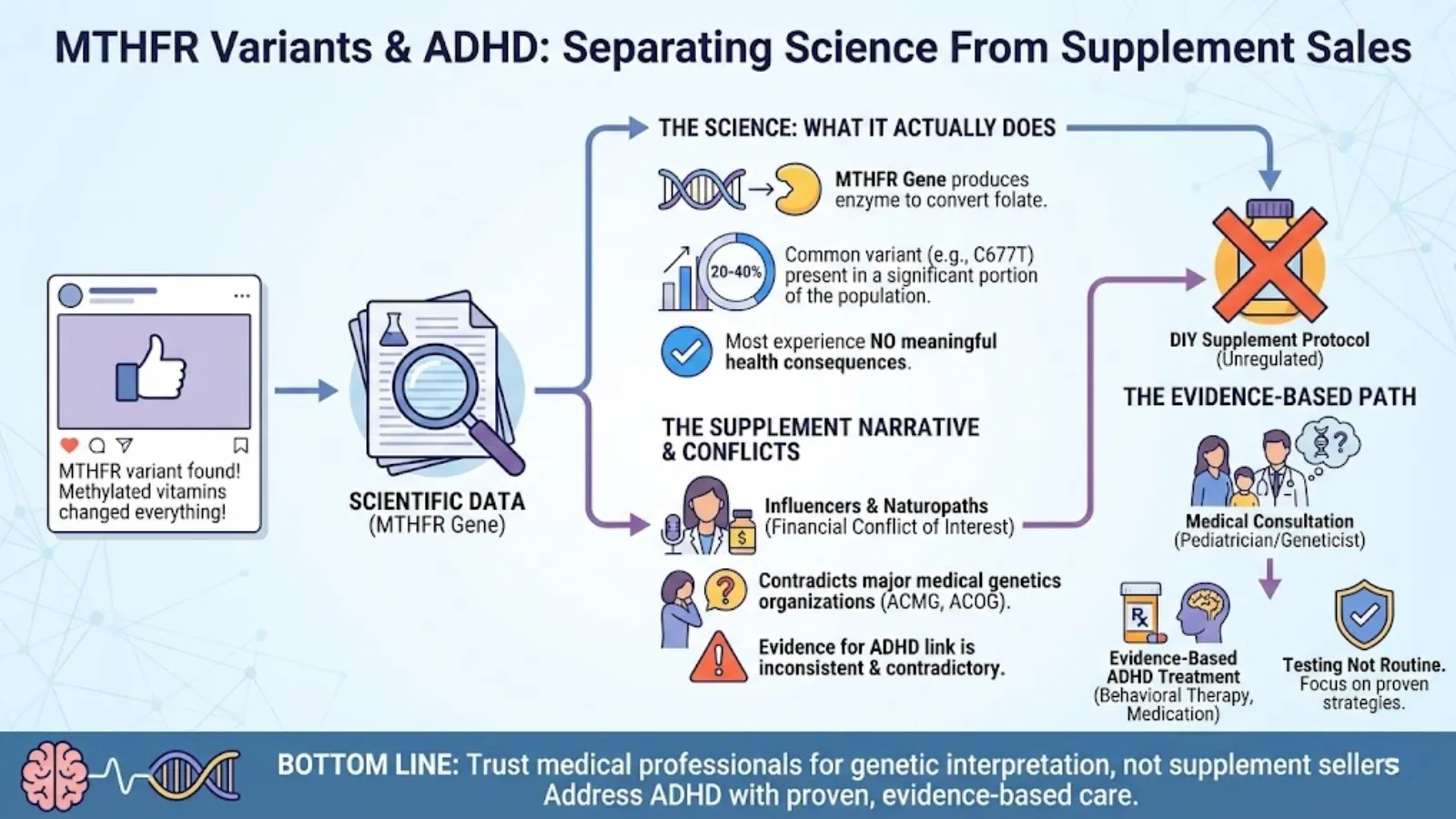
MTHFR Gene Variants and ADHD: Separating Science From Supplement Sales
What the MTHFR gene actually does, what research shows about MTHFR and ADHD, who profits from the supplement pitch, and what to ask your child's doctor instead.
Topic
Cynthia Hammer was diagnosed with inattentive ADHD at 49. The book pairs her story with practical guidance on getting a diagnosis, medication, health habits, and the everyday problem areas, and it argues that late-diagnosed adults can do well once they know what they're working with. It's personal experience, not research. Foreword by William Dodson.
Russell Barkley's parent guide covers the whole territory: what ADHD is, how it works in a developing brain, how to manage behavior at home, how to deal with schools, and how to think about medication. It's long and thorough on purpose. For parents who want the full picture from a researcher instead of an influencer, and who are willing to read a real book to get it. The audiobook is an earlier edition.
Russell Barkley has spent his career researching ADHD, and this is his guide for the adult living with it. It explains how ADHD works, lays out treatment and medication choices, and then gets specific about work, home, and relationships. This is the version backed by decades of research, not one person's story. Get the 2021 second edition. His own site still lists the 2010 first.
Stephen Hinshaw and Katherine Ellison wrote a question-and-answer overview of ADHD: the science, diagnosis, treatment, medication, and the controversies around all of it. It's written for general readers, so parents, teachers, and adults new to the diagnosis all get the same clear answers. The prevalence and research data date from 2015. Hand it to the relative who still thinks ADHD is an excuse.
Emma Mahony was diagnosed with ADHD at 52, and this is her memoir and guide to what came after: getting the diagnosis, deciding about medication, and rebuilding daily life around what she finally understood. It also covers the overlap with menopause. If you were diagnosed in midlife, here is someone who did it at the same age.
Lotta Borg Skoglund and Helena Kopp Kallner are Swedish clinicians, and they connect the sex-hormone research to ADHD across a whole life, from puberty through post-menopause. It covers what hormones do to symptoms and to medication decisions at each stage. For women with ADHD and the clinicians treating them: the evidence in one place instead of scattered across journals.
Gina Pera wrote this for the partner, not the person with ADHD. It covers how to recognize adult ADHD in someone you love, what treatment and medication involve, and the relationship dynamics that build up around symptoms nobody has named. If you're the one holding the household together and nobody has explained why, this talks to you. It uses A.D.D. terminology.
Steve Silberman wrote the history of autism: the research, the people who shaped it, and the neurodiversity movement that grew up in response. It covers how the diagnosis came to be and how autistic people came to speak for themselves. Reviewers have criticized its retrospective diagnoses of historical figures and its portrayal of Leo Kanner. For anyone who wants to understand where the current ideas came from.
Timothy Wilens and Paul Hammerness are clinicians, and they wrote the parent guide to psychiatric medication for kids: what the medications do, what to watch for, and how to make the decision with the prescriber instead of nodding in the appointment. The 2016 edition predates newer medications, so check current options with a prescriber. For parents facing the medication question who want to walk in informed.
Eric Garcia is an autistic journalist, and he reports on autism the way a journalist should: policy, services, and the actual lives of autistic adults. He covers where the systems fail and who gets left out of the conversation, with sources instead of sentiment. Read it if you want the history and the politics, or if you hire and manage people and want to know what they're up against.
What the MTHFR gene actually does, what research shows about MTHFR and ADHD, who profits from the supplement pitch, and what to ask your child's doctor instead.
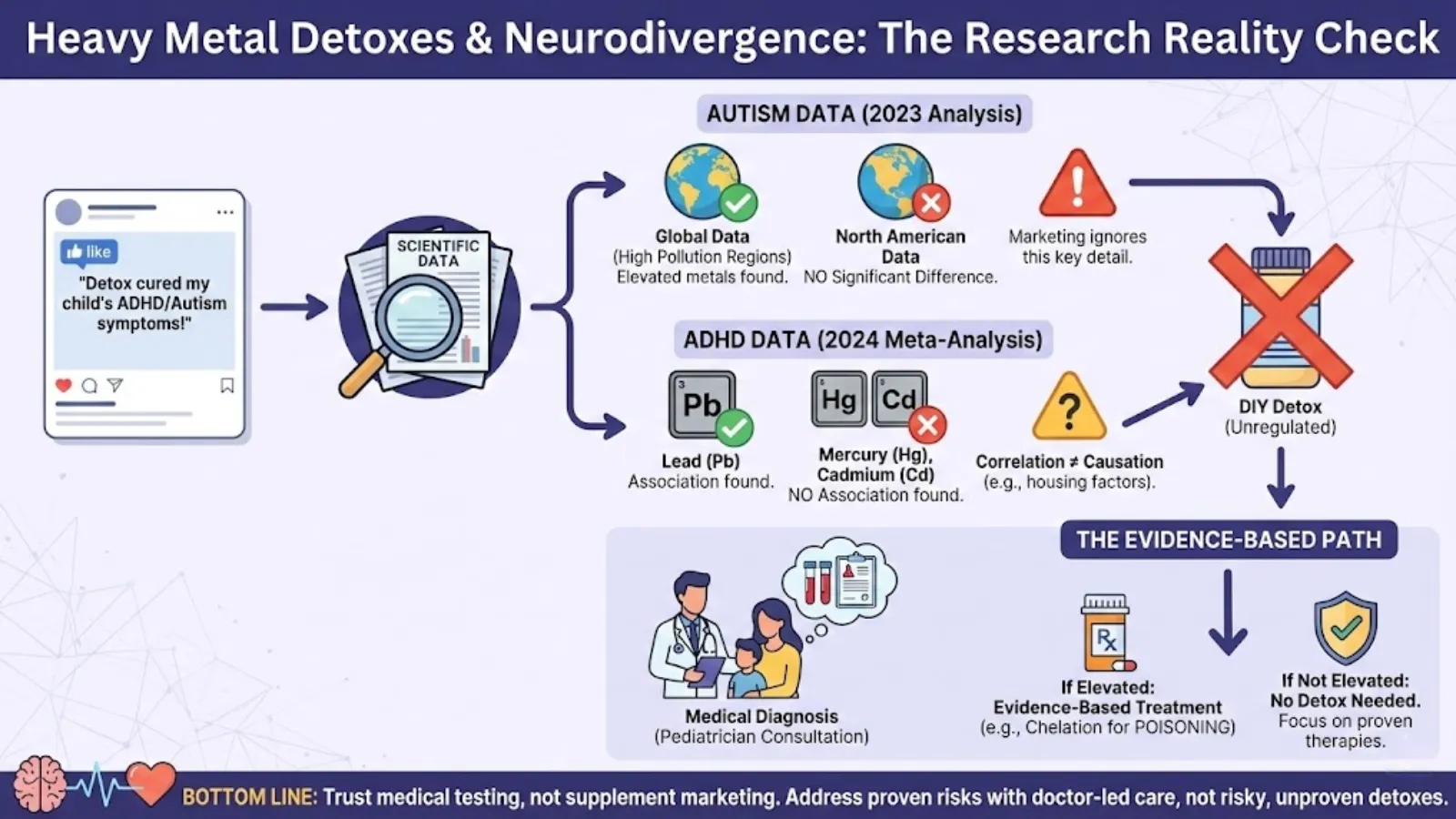
What studies on heavy metals in ADHD and Autism actually found, why detox supplements don't follow from them, the real risks, and what to do if you're worried.
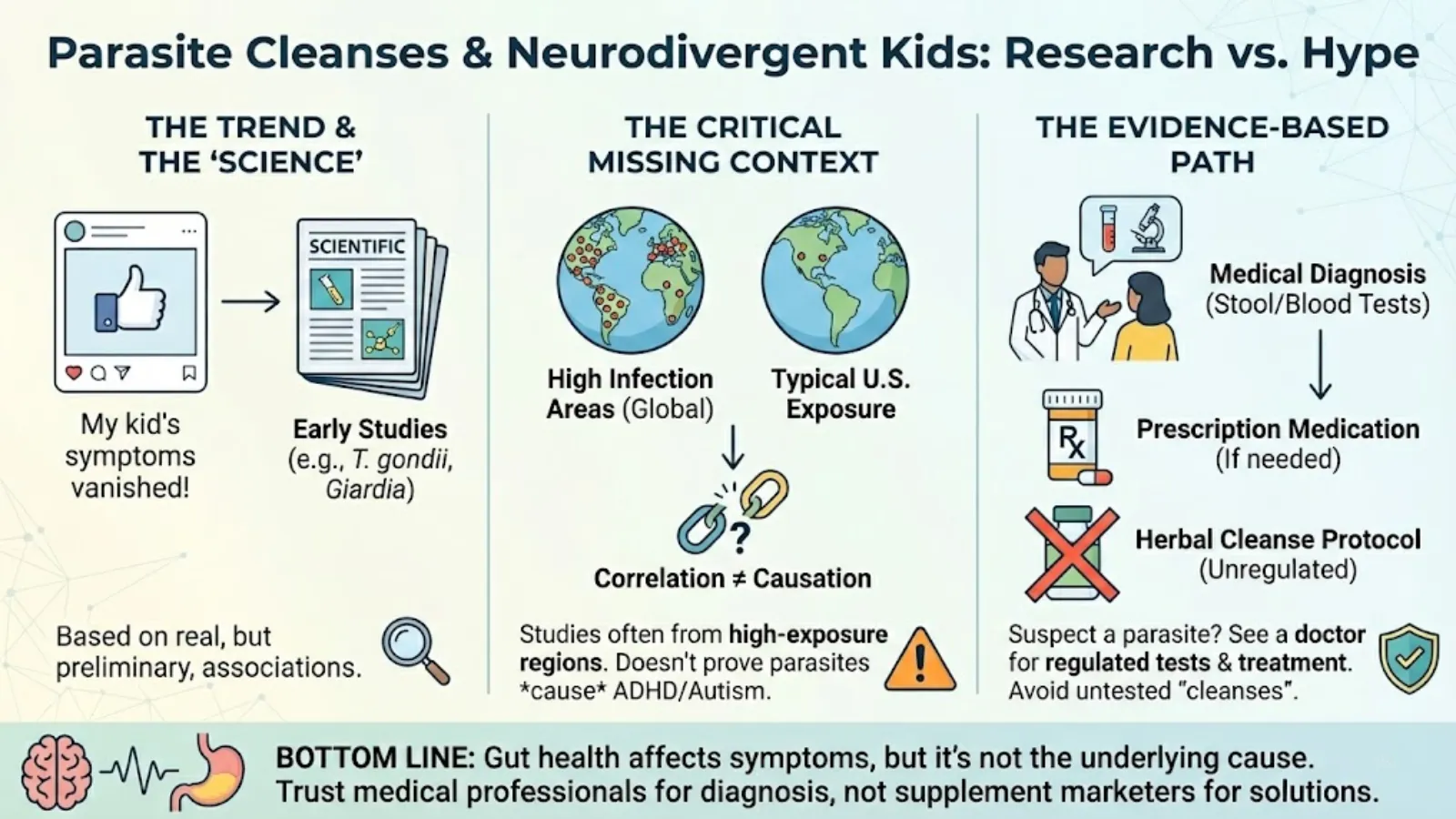
Parasite cleanses are sold as a fix for ADHD and Autism. Here's what the studies actually found, why the context matters, and what to do if you're worried.

A 2024 study found ADHD stimulants act on reward and wakefulness, not attention. Learn what that means for your child and why sleep matters just as much.

Autism existed long before Tylenol. What the research on acetaminophen in pregnancy shows, why Autism diagnoses are rising, and the harm fearmongering does.

CBD is marketed to parents of ADHD and Autistic kids, but many products are mislabeled or contaminated. Learn the risks for developing brains and what works.

Omega-3, magnesium, saffron, methylfolate, and melatonin: what the research says about popular ADHD supplements, when testing helps, and what works better.