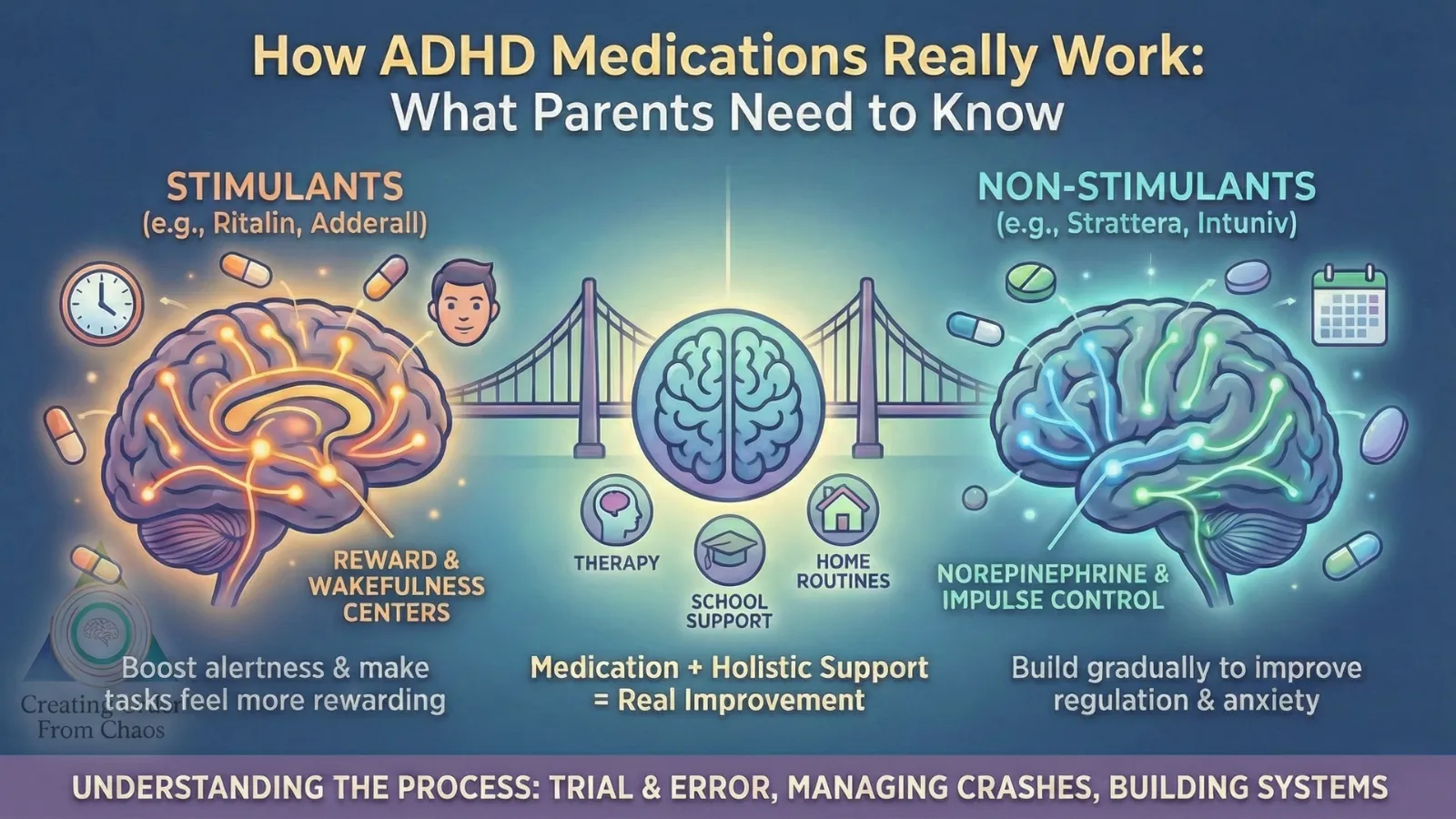
How ADHD Medications Really Work: What Parents Need to Know
How stimulants and non-stimulants work, when kids start them, what a medication trial looks like, how to handle crashes, and why meds are only the start.
Topic
Russell Barkley boiled his research and clinical work down to twelve principles for raising a kid with ADHD, covering behavior, emotion, meltdowns, and school. It's shorter and more direct than his big parent guide. For parents who want the core of what the research says to do, from a researcher and not a guru, in a book they can finish this week.
The same two authors, back with newer science and a strengths-first take on ADHD. It covers how it shows up from childhood through adulthood, and what to do about focus, follow-through, and the way you talk to yourself about both. The tone is more certain than the evidence in a few places: the balance and cerebellar exercise ideas rest on thinner research than the book lets on. If you read Driven to Distraction years ago, this is the one to read next.
Edward Hallowell and John Ratey's follow-up to Driven to Distraction, written for adults with ADHD: what the condition is, how it affects focus and getting things done, and what it does inside a marriage. It's about 20 years old and uses ADD terminology. ADHD 2.0 is their newer book. For adults who want a full guide to how ADHD plays out in daily life and relationships.
For a lot of adults, this is the book where somebody finally said the words out loud. Edward Hallowell and John Ratey fill it with case after case of people whose lives look like yours, and what they did about each one. The original came out in 1994, and they revised it in 2011 with updated medical information, so get the revised edition. Even revised, it predates the DSM-5, and the thinking has moved on since. Read it for the recognition. For the same two authors working from the current science, that's ADHD 2.0.
Jessica McCabe spent years making YouTube videos about her own ADHD and interviewing researchers along the way. This book is what she built from all of it. Focus, time, getting started, and the shame that piles up when none of those work the way you were told they should. It reads like an insider explaining it to you, plainly.
Cynthia Hammer was diagnosed with inattentive ADHD at 49. The book pairs her story with practical guidance on getting a diagnosis, medication, health habits, and the everyday problem areas, and it argues that late-diagnosed adults can do well once they know what they're working with. It's personal experience, not research. Foreword by William Dodson.
Thomas Brown is a clinician-researcher, and this book is case stories of bright teens and adults with ADHD who are stuck, and what the emotions underneath have to do with it. Intelligence doesn't protect anyone from this. If you or your kid can do it when you care and can't when you don't, start here.
Russell Barkley's parent guide covers the whole territory: what ADHD is, how it works in a developing brain, how to manage behavior at home, how to deal with schools, and how to think about medication. It's long and thorough on purpose. For parents who want the full picture from a researcher instead of an influencer, and who are willing to read a real book to get it. The audiobook is an earlier edition.
Russell Barkley has spent his career researching ADHD, and this is his guide for the adult living with it. It explains how ADHD works, lays out treatment and medication choices, and then gets specific about work, home, and relationships. This is the version backed by decades of research, not one person's story. Get the 2021 second edition. His own site still lists the 2010 first.
Cate Osborn, Erik Gude, and Rennie Dyball wrote the broad adult ADHD guide from the inside: executive dysfunction, time blindness, building systems, hormones, rejection sensitivity, intimacy, and dealing with healthcare. It makes room for BIPOC, trans, and nonbinary experiences that most ADHD books skip. The authors are educators and advocates with ADHD, not clinicians. For adults with ADHD who want one book that covers the actual life and not just the attention part.
Sol Smith was diagnosed autistic as an adult and used his years as a professor to work out how to explain the differences and build skills around them. The book covers common misconceptions about autism, imposter syndrome, the hard parts of unmasking, and how to adjust your environment instead of yourself. It's coaching and lived experience, not a clinical text. For autistic adults figuring out who they are after years of fitting in.
You can have a task planned out perfectly and still not start it. My friend Tamara wrote the book on that gap. Dr. Tamara Rosier is an ADHD coach and the founder of the ADHD Center of West Michigan, and her argument is that the block usually isn't the plan. It's how you feel about starting. Most ADHD books hand you a planner and a system. Tamara starts with the emotions running your focus and the shame that builds behind them, because that's the layer the planners never touch.
Sari Solden and Michelle Frank wrote this for women with ADHD, and they built it around shame and identity instead of planners. It deals with the masking, the shame sitting underneath it, and building a life that fits the brain you have instead of the one you were performing. If you were diagnosed late, a lot of it is going to sound like your own history.
Tracy Otsuka hosts the podcast of the same name, and the book carries the same stance: your brain is not the problem you were told it was. It covers identity, shame, and the specific experience of being diagnosed later in life as a woman. Strengths-first, written for women who have spent years compensating.
Penn and Kim Holderness are married, and one of them has ADHD. This is their funny, personal account of what that looks like in a household, with practical tips mixed in. It leans hard on strengths and it's personal, not clinical. Read it when you need to laugh at the recognition before you're ready to work on anything.
Stephen Hinshaw and Katherine Ellison wrote a question-and-answer overview of ADHD: the science, diagnosis, treatment, medication, and the controversies around all of it. It's written for general readers, so parents, teachers, and adults new to the diagnosis all get the same clear answers. The prevalence and research data date from 2015. Hand it to the relative who still thinks ADHD is an excuse.
A picture book about an autistic zebra who worries that his differences are all anyone sees, and who learns they're part of who he is. It's simple enough for a young child and honest enough that it doesn't talk down. For young autistic kids and the parents reading to them, when the goal is a kid who knows the word and doesn't flinch at it.
Leanne Maskell is a coach who was diagnosed autistic and ADHD as an adult, and this is half memoir, half practical guide to living with both at once, including the parts where the two pull in opposite directions. She covers late diagnosis, identity, and what it takes to stop fighting your own wiring. It's self-published, memoir-heavy, and it covers childhood trauma. She's UK-based. For AuDHD adults, especially late-diagnosed women, who haven't found a book that describes both halves of them.
Emma Mahony was diagnosed with ADHD at 52, and this is her memoir and guide to what came after: getting the diagnosis, deciding about medication, and rebuilding daily life around what she finally understood. It also covers the overlap with menopause. If you were diagnosed in midlife, here is someone who did it at the same age.
Jenara Nerenberg is a journalist, and she went looking for why ADHD, autism, and sensory sensitivity get missed in women. The book covers late diagnosis, sensory processing, and the identity shift when the explanation finally shows up. One thing to know: it groups highly sensitive person, which is a research trait and not a diagnosis, with the clinical conditions. For women who got every label except the right one for decades.
Dr. Khurram Sadiq is a UK neurodevelopmental psychiatrist, and this is his explanation of how autism and ADHD overlap and interact in the same person. It pairs the clinical picture with lived accounts and guidance on adjusting to a new diagnosis and advocating for yourself. It's the clinician's version of AuDHD, not a memoir. It's written in a UK healthcare context, and the US edition has a different ISBN.
Lotta Borg Skoglund and Helena Kopp Kallner are Swedish clinicians, and they connect the sex-hormone research to ADHD across a whole life, from puberty through post-menopause. It covers what hormones do to symptoms and to medication decisions at each stage. For women with ADHD and the clinicians treating them: the evidence in one place instead of scattered across journals.
Gina Pera wrote this for the partner, not the person with ADHD. It covers how to recognize adult ADHD in someone you love, what treatment and medication involve, and the relationship dynamics that build up around symptoms nobody has named. If you're the one holding the household together and nobody has explained why, this talks to you. It uses A.D.D. terminology.
Donna Henderson, Sarah Wayland, and Jamell White take the diagnostic criteria one at a time and show what each looks like in people who learned to hide it, with more than a hundred autistic adults quoted along the way. The point is the presentations clinicians were never trained to see: the masked, the verbal, the late. There's a separate companion guide for diagnosing, so don't confuse the two. If you suspect you were missed, or you're the professional doing the assessing, this is the reference.
Written for kids, not about them. Kathleen Nadeau and Ellen Dixon explain what ADHD is in language a child can take in, and then give them tools they can use themselves for focus and slowing down. For parents who want their kid to understand their own brain instead of only hearing about it from adults.
John Elder Robison grew up autistic with nobody around him who could name it, and he didn't find out until he was an adult. The memoir covers the years of being the strange kid, then the strange adult, then the man who finally had an explanation. It uses Asperger's terminology, which DSM-5 retired. If you were diagnosed late, especially as a man, this is someone who spent the same decades not knowing.
Dr. Helen Wall is a GP, and her book is about what perimenopause and menopause do to ADHD. It covers how symptoms shift as hormones change and how to advocate for yourself with doctors who may not connect the two. It's a UK book, so the healthcare references are NHS-based. If things got harder and you want the mechanism, not a shrug, start here.
Cynthia Kim was diagnosed autistic as an adult and wrote the manual she wished she'd had: how to handle work, friendships, marriage, and basic self-care when your brain runs on different rules. Practical and specific rather than inspirational. It uses Asperger terminology. For late-diagnosed adults, women in particular, who have the diagnosis now and need to know what to do with it.
Steve Silberman wrote the history of autism: the research, the people who shaped it, and the neurodiversity movement that grew up in response. It covers how the diagnosis came to be and how autistic people came to speak for themselves. Reviewers have criticized its retrospective diagnoses of historical figures and its portrayal of Leo Kanner. For anyone who wants to understand where the current ideas came from.
Laura James is a working journalist who was diagnosed autistic in her mid-40s, and this memoir covers what came after. Sensory overload, the relief and grief of finally having a name for it, and what that does to the story you tell about your own life. For women diagnosed late who want company on the page, not a workbook.
Gabor Maté is a physician, and his argument is that early stress and attachment shape how ADHD develops. His approach to healing follows from that. He covers emotional regulation and family dynamics through that lens, for adults with ADHD and for parents. It's contested: his environmental account of where ADHD comes from conflicts with strong evidence for genetic heritability. Read it as one physician's case, with that in hand.
Kathleen Nadeau on ADHD in later life, which almost nobody writes about. It covers the anxiety and depression that often ride along, the support systems that matter as you age, and what an ADHD-friendly retirement looks like. For older adults, including those diagnosed late, who have noticed that every other book assumes the reader is thirty-five.
Ellen Notbohm wrote this from the child's point of view, and it's the book people hand you in the first weeks after a diagnosis for a reason. Ten things an autistic kid would tell you if they could, about sensory input, about language, about what the behavior means. Short and plain. For parents and teachers who just got the news and need somewhere to start.
Andy Williams and Gaz Hitchin run the Autism Dadcast, and this handbook is for fathers of autistic kids who never expected to need one. It covers diagnosis, grief, meltdowns, holding down work, and the dad's own mental health while all of that is happening. It isn't out yet. It's announced for April 2027, and it's UK-specific in places.
Temple Grandin walks through the neuroscience of autism and lays out her model of the different ways autistic people think. She writes from inside an autistic brain, so the science comes with a running account of what it feels like from the other side of the scanner. The neuroscience dates from 2013. Read it to understand your own sensory wiring or your kid's, from someone who lives there.
David Finch found out he was autistic after years of marriage, and he responded by keeping a journal of what worked and what didn't in being a husband. The book is that record, honest about the arguments, the misreads, and the slow rebuilding. It uses Asperger terminology. For autistic men and their partners who want to see what it looks like when a diagnosis becomes a tool instead of an excuse.
Ayana Gibbs and Stephanie Ozuo are Black women with ADHD, and they wrote this part memoir, part guide. It covers the myths that get Black women missed, sickle cell disease, rejection sensitivity, and the barriers to getting diagnosed and treated. It isn't out yet. It's announced for February 2027, and the date may change.
Barry Prizant has spent decades working with autistic kids and their families, and his argument is simple: the behavior everybody wants to stop is usually the kid coping or communicating. He walks through meltdowns, repetition, and the things that look like defiance, and shows what each one is doing for the child. If you're a parent, teacher, or clinician who has been handed a behavior plan and a bad feeling about it, start here. Get the 2022 expanded edition.
Ellie Middleton was diagnosed with both ADHD and autism as an adult, and UNMASKED is her plain-language primer on what each one is, how they overlap, and what masking costs. No clinical gatekeeping and no jargon. It's written in a UK context. If you're newly diagnosed AuDHD, or a young person trying to explain yourself to people who keep saying you seem fine, hand them this one first.
Devon Price is a social psychologist writing from inside the experience, and this is the book on masking: the lifelong performance of looking normal and what it costs. It covers how masking forms, how to recognize it in yourself, the burnout it produces, and how to start taking it off. For adults who suspect or just learned they are autistic, especially the ones who were told they couldn't be because they seemed fine.
Megan Griffith was diagnosed with both autism and ADHD in her late twenties, and she wrote this practical guide from inside that. Daily life, work, identity, and staying out of burnout when the two pull in opposite directions. If every book you've picked up explains half of you, this one covers both. It's lived experience, not clinician-authored.
Sarah and Jess Hendrickx pull together the research on autistic women and girls and set it next to first-person accounts, from childhood through old age. Masking, burnout, and what menopause does to an autistic nervous system each get their own treatment. Get the 2024 second edition. For women wondering whether the diagnosis fits, the clinicians assessing them, and parents of girls who don't look like the textbook.
You called yourself those three words for years before you had a better explanation. Kate Kelly and Peggy Ramundo wrote this in 1993 for adults who did exactly that. Their argument is simple: the problem was never your character. Then it gets practical about daily life. The language is dated, same era, same ADD terminology. Read it for the part where somebody finally says the problem isn't you.
How stimulants and non-stimulants work, when kids start them, what a medication trial looks like, how to handle crashes, and why meds are only the start.

Medication is the foundation, not the whole plan. Learn what therapy, parent coaching, and your own support add, and how the pieces work together for your kid.
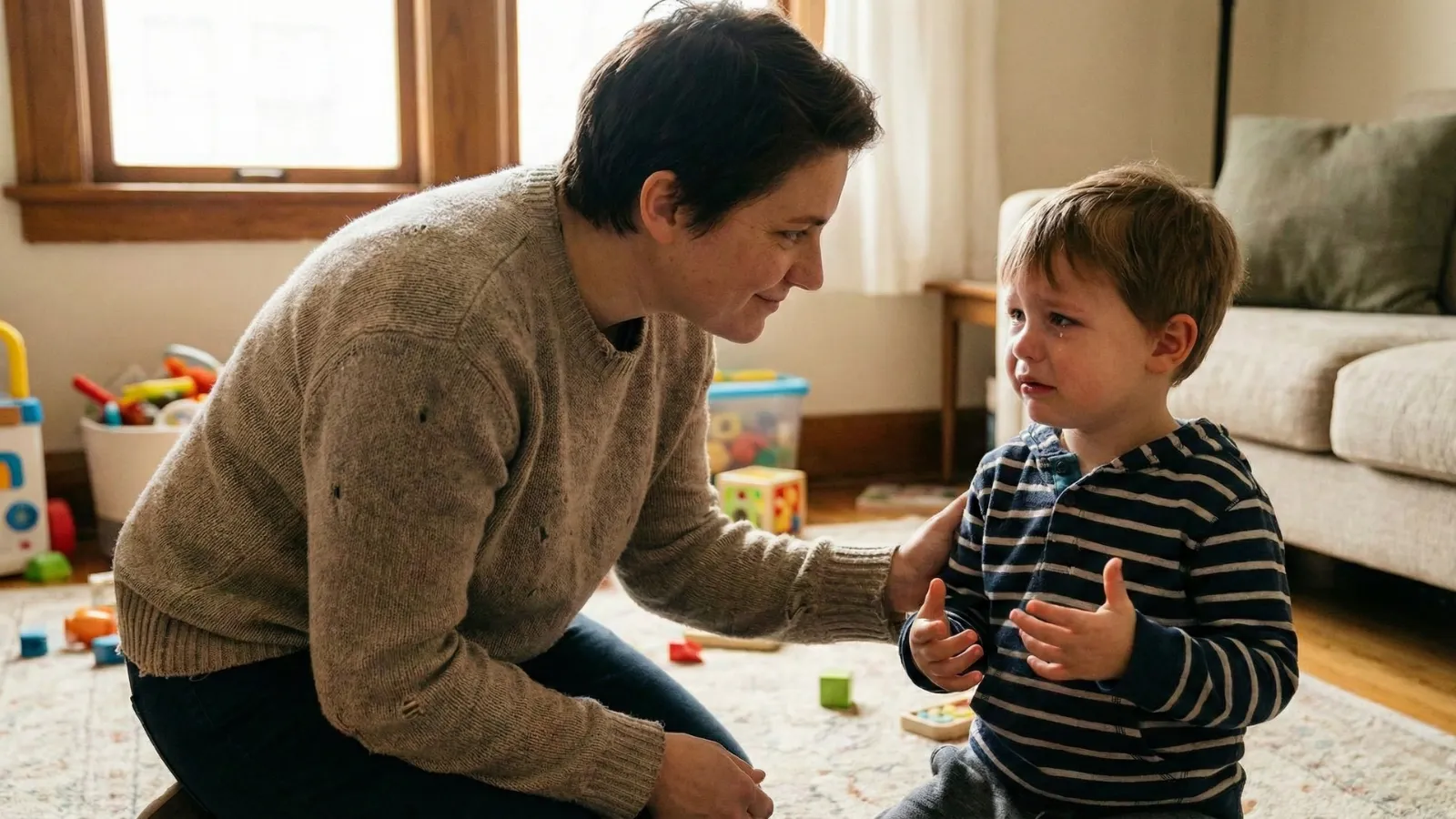
Strict parenting often backfires with ADHD. Learn how medication, therapy, coaching, and lifestyle support work together, and what to know about addiction risk.

What a non-medication path for ADHD takes: parent training first, movement, nutrition, the few supplements with evidence, and therapy that supports the family.

What to expect when your child starts ADHD medication: common options, side effects and when they fade, what progress looks like, and why skills still take work.

ADHD and Autism are highly heritable. Learn what the genetics show, why they often show up together, why it isn't about blame, and what to do with that info.

The early signs of ADHD and Autism in children, how to get a diagnosis, where parent training and therapy fit, and how to find the right specialists.

Some signs of ADHD and Autism in young kids overlap with nutritional deficiencies. Learn how to tell them apart and which early interventions help either way.

Parent training is the recommended first step in treating ADHD in young children. Learn what it involves, why starting early matters, and where medication fits.

After an ADHD diagnosis in adulthood, how to understand your brain, navigate care, align your life with your values and strengths, and build a support network.
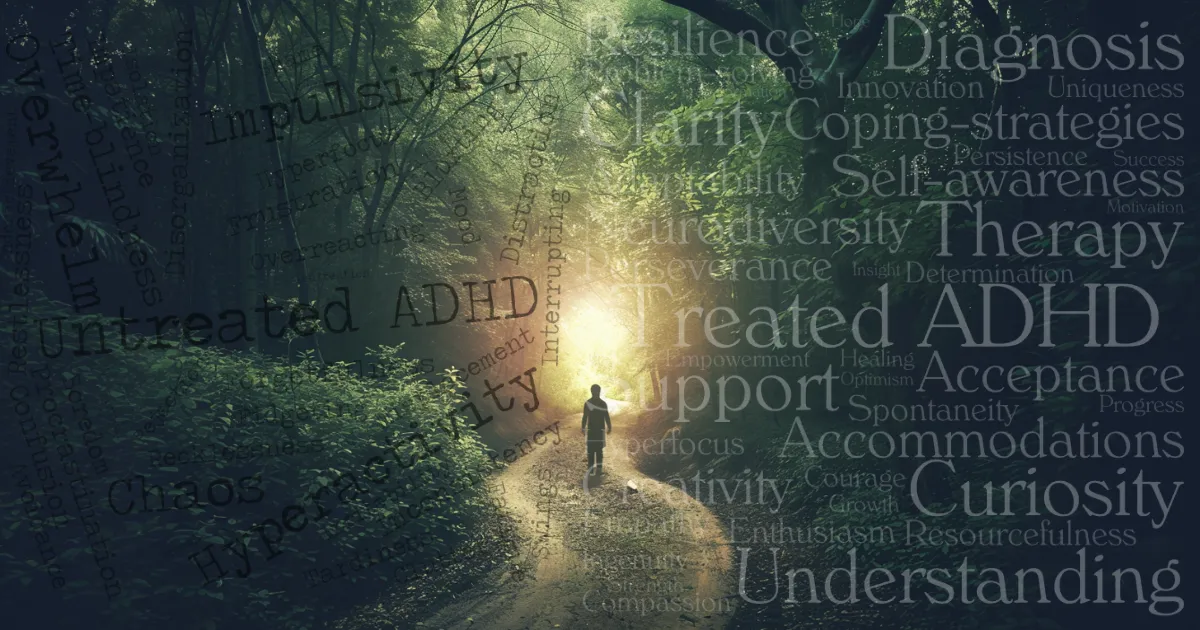
How adults with ADHD can approach diagnosis, talk with ADHD-informed psychiatrists, find trauma-informed therapists, and choose lifestyle changes that help.

If your life has always felt chaotic, undiagnosed ADHD may be why. Learn how to get a diagnosis and what support helps adults with ADHD move forward.