The Importance of Self-Advocacy
Self-advocacy means telling people what you deal with and what you need. Learn how it helps at home and work, eases RSD, and why boundaries and rest matter.
Topic
Ari Tuckman is a psychologist and sex therapist, and this is a direct book about ADHD and sex. It covers how ADHD affects desire, intimacy, and the relationship around them, built on his own survey of couples. That's community survey data, not controlled research. For couples where the sex life has gone quiet and nobody wants to be the one to bring it up.
Edward Hallowell and John Ratey's follow-up to Driven to Distraction, written for adults with ADHD: what the condition is, how it affects focus and getting things done, and what it does inside a marriage. It's about 20 years old and uses ADD terminology. ADHD 2.0 is their newer book. For adults who want a full guide to how ADHD plays out in daily life and relationships.
Maguire's book for adults this time: scripts and strategies for making and keeping friends when you have ADHD, autism, or anxiety, and the usual advice to just put yourself out there has never once worked. It covers starting friendships and keeping them alive. For the neurodivergent adult who is lonely and tired of being told it's a confidence problem.
Edward Hallowell, his wife Sue, and Melissa Orlov on what constant distraction does to intimacy. It draws on ADHD but it's written for any busy couple who feel like roommates passing in the hall. Pick it up when the problem is less one diagnosis and more two people who stopped paying attention to each other.
Russell Barkley has spent his career researching ADHD, and this is his guide for the adult living with it. It explains how ADHD works, lays out treatment and medication choices, and then gets specific about work, home, and relationships. This is the version backed by decades of research, not one person's story. Get the 2021 second edition. His own site still lists the 2010 first.
Melissa Orlov's six-step guide for couples where one partner has ADHD. It names the patterns that wear these marriages down, then walks through how to repair them, with communication and family dynamics in the frame. If you're both exhausted and neither of you can say exactly why, start here.
Cate Osborn, Erik Gude, and Rennie Dyball wrote the broad adult ADHD guide from the inside: executive dysfunction, time blindness, building systems, hormones, rejection sensitivity, intimacy, and dealing with healthcare. It makes room for BIPOC, trans, and nonbinary experiences that most ADHD books skip. The authors are educators and advocates with ADHD, not clinicians. For adults with ADHD who want one book that covers the actual life and not just the attention part.
Ross Greene wrote this for parents of kids who go from fine to full meltdown in seconds and can't bend once they're there. His model, Collaborative and Proactive Solutions, starts from the idea that kids do well if they can, and that the explosions are a skills problem, not a motivation problem. For parents and teachers who have tried every consequence chart and watched each one fail. The audiobook is abridged and predates the 6th edition.
Sharon Saline built this around what kids with ADHD say they wish their parents understood, and turned it into an approach to working with them instead of on them. Communication, school, and the daily battles over homework and getting out the door are the ground it covers. For parents who are tired of being the nag and want a different way in.
Caroline Maguire's Play Better Plan is a parent-coaching method for kids who struggle socially, including kids with ADHD who miss the cues everybody else reads automatically. It puts you in the coaching role, working the specific skills at home instead of hoping they pick them up. For parents who have watched their kid get left out and don't know how to help without making it worse.
Tamara Rosier writes for the whole household where ADHD lives in one person or several: how emotions escalate, how conflict runs, and how repair happens after. It's practical, with the family system in view instead of one person's symptoms. It comes from a Christian imprint (Revell). For parents and couples who are tired of the same fight and want to understand what's actually driving it.
Penn and Kim Holderness are married, and one of them has ADHD. This is their funny, personal account of what that looks like in a household, with practical tips mixed in. It leans hard on strengths and it's personal, not clinical. Read it when you need to laugh at the recognition before you're ready to work on anything.
Eva Mendes is a couples therapist, and she interviewed neurodiverse couples about what makes their relationships work. The conversations cover connection, sex, co-parenting, money, and communication across the differences in how each partner is wired. For couples where one or both partners are autistic and the usual relationship advice keeps assuming two people who read each other the same way.
Eli Lebowitz's SPACE program treats a child's anxiety or OCD by changing what the parents do, specifically by reducing the accommodations families build around the fear. It's a parent-delivered program, laid out so you can run it at home. For parents of anxious kids and teens who have reorganized the whole house around the anxiety and watched it grow anyway.
Chloé Hayden is an autistic and ADHD actor, and this is part memoir, part guide for teens and young adults figuring out who they are underneath the mask. Friendships, identity, and the exhaustion of performing normal. It's an Australian context, and it isn't Temple Grandin's similarly titled book. For the teenager who was just diagnosed, or the parent who wants to hand them something written by someone who lived it recently enough to remember.
Deborah Reber is a parent, not a clinician, and this is the book about changing how you think before you change what you do. It's a set of mindset shifts for parents of neurodivergent and twice-exceptional kids, starting with letting go of the conventional script. For the parent who is exhausted from trying to make an atypical kid fit a typical path.
James Guttman is a single dad raising a non-speaking autistic child, and this is his candid account of it. It covers the daily work of parenting, the family dynamics, and the gatekeeping that treats fathers as backup caregivers instead of parents. It's about fathering an autistic child, not about being a neurodivergent dad. For dads who have been talked past in every waiting room.
Gina Pera wrote this for the partner, not the person with ADHD. It covers how to recognize adult ADHD in someone you love, what treatment and medication involve, and the relationship dynamics that build up around symptoms nobody has named. If you're the one holding the household together and nobody has explained why, this talks to you. It uses A.D.D. terminology.
Cynthia Kim was diagnosed autistic as an adult and wrote the manual she wished she'd had: how to handle work, friendships, marriage, and basic self-care when your brain runs on different rules. Practical and specific rather than inspirational. It uses Asperger terminology. For late-diagnosed adults, women in particular, who have the diagnosis now and need to know what to do with it.
Tony Attwood and Maxine Aston wrote this for professionals: a clinical guide to adapting couples work when one or both partners are autistic. It covers the communication differences and what those differences call for in standard counseling. Clinicians and coaches who see neurodiverse couples will use it. Couples can read it to see what good help should look like. Some autistic readers have criticized the authors' earlier framing of autistic partners, so read with that in mind.
Gabor Maté is a physician, and his argument is that early stress and attachment shape how ADHD develops. His approach to healing follows from that. He covers emotional regulation and family dynamics through that lens, for adults with ADHD and for parents. It's contested: his environmental account of where ADHD comes from conflicts with strong evidence for genetic heritability. Read it as one physician's case, with that in hand.
Ellen Notbohm wrote this from the child's point of view, and it's the book people hand you in the first weeks after a diagnosis for a reason. Ten things an autistic kid would tell you if they could, about sensory input, about language, about what the behavior means. Short and plain. For parents and teachers who just got the news and need somewhere to start.
Eliza Fricker draws it instead of explaining it: an illustrated guide to living with a kid who has a demand-avoidant profile, from a parent who has one. The drawings carry what prose misses about the daily texture of it. PDA is contested and isn't in DSM-5-TR or ICD-11, and the framing here is UK. For parents who need to see their own house on the page, and for the relatives who still don't believe you.
David Finch found out he was autistic after years of marriage, and he responded by keeping a journal of what worked and what didn't in being a husband. The book is that record, honest about the arguments, the misreads, and the slow rebuilding. It uses Asperger terminology. For autistic men and their partners who want to see what it looks like when a diagnosis becomes a tool instead of an excuse.
Victoria Honeybourne's employer guide covers autism, ADHD, dyslexia, and related conditions in one place: what adjustments look like, how to manage, and how to communicate with neurodivergent staff, clients, and customers. It's practical rather than theoretical, and the legal framing is UK. For the business owner or manager who needs to know what to do on Monday.
Terry Matlen wrote this for women with ADHD, and it stays practical: the household, relationships, sensory overload, and self-care. Chores, organizing your space, and the sensory side most ADHD books skip entirely. It's for the woman whose noise, clutter, and demands all arrive at once.
Barry Prizant has spent decades working with autistic kids and their families, and his argument is simple: the behavior everybody wants to stop is usually the kid coping or communicating. He walks through meltdowns, repetition, and the things that look like defiance, and shows what each one is doing for the child. If you're a parent, teacher, or clinician who has been handed a behavior plan and a bad feeling about it, start here. Get the 2022 expanded edition.
Devon Price's follow-up to Unmasking Autism moves from understanding the mask to living without it. It covers the practical skills for friendships, family, work, and romance, and the communication each one takes when you stop performing. For autistic and AuDHD adults who finished the first book and then wondered what an unmasked week actually looks like.
Jude Morrow was diagnosed autistic at 11, and this memoir is about becoming a father as an autistic man. It covers identity, family dynamics, and the question in the title. It's one of the few first-person accounts from that exact seat, for autistic men raising children and for the partners and parents trying to understand them.
Kristen Carder is an ADHD coach, and her book is a trauma-informed look at relationships of every kind: partners, friends, kids, coworkers, and the family you grew up in. It covers rejection sensitivity, communication, and how to repair after a conflict. The title is for the adult with ADHD who still braces for a scolding every time someone says we need to talk.
Self-advocacy means telling people what you deal with and what you need. Learn how it helps at home and work, eases RSD, and why boundaries and rest matter.

How knowing your needs and setting firm boundaries helped me find the right partner, and what adults with ADHD can bring to dating and relationships.

Twelve practical ways adults with ADHD can connect, make friends, and keep them, from finding your tribe and backing up your memory to ditching perfectionism.
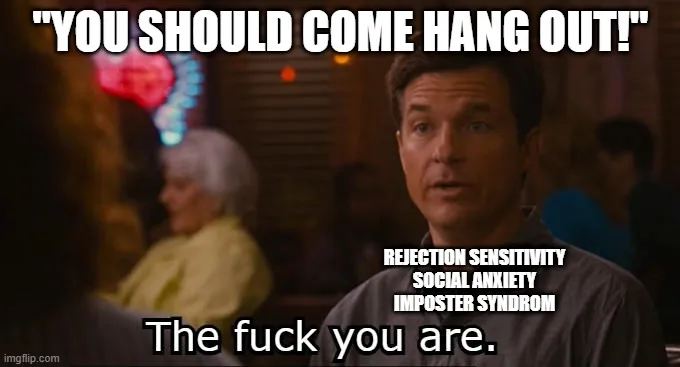
Why adults with ADHD struggle to keep friends, why isolation is dangerous for your health, and practical first steps to reconnect and build new friendships.