
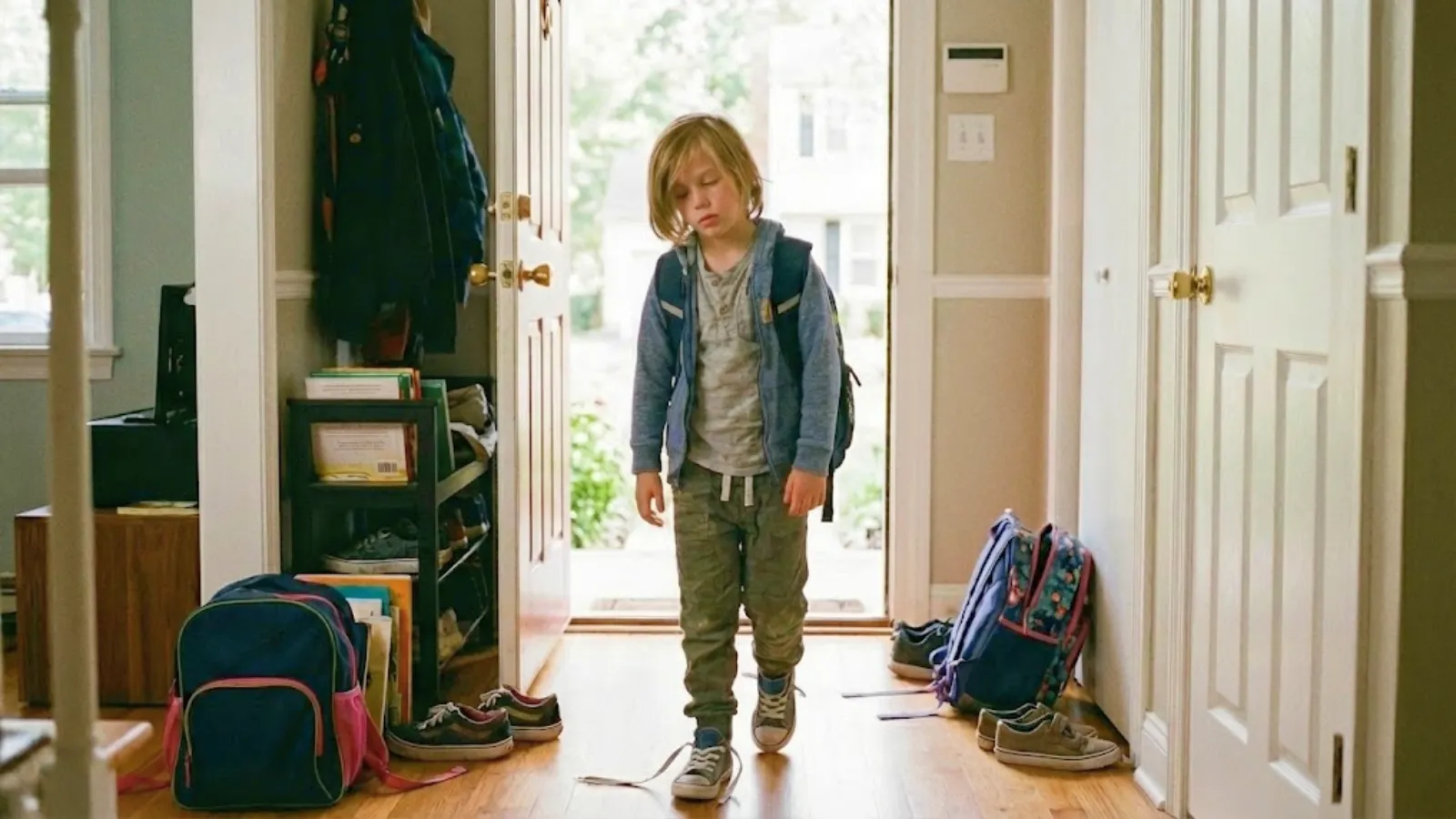
Why Does Your Child Fall Apart the Moment They Get Home From School?
Your child holds it together at school and falls apart at home. Learn why after-school restraint collapse happens and what neurodivergent kids need at the door.
Topic
Russell Barkley boiled his research and clinical work down to twelve principles for raising a kid with ADHD, covering behavior, emotion, meltdowns, and school. It's shorter and more direct than his big parent guide. For parents who want the core of what the research says to do, from a researcher and not a guru, in a book they can finish this week.
Greene takes Collaborative and Proactive Solutions into the classroom, for the kid who keeps ending up in the office and the teachers who are running out of options. He covers why discipline systems built on rewards and punishment miss these students, and what solving problems with them looks like. For educators first, and for parents who need to walk into the school meeting speaking the same language.
Russell Barkley's parent guide covers the whole territory: what ADHD is, how it works in a developing brain, how to manage behavior at home, how to deal with schools, and how to think about medication. It's long and thorough on purpose. For parents who want the full picture from a researcher instead of an influencer, and who are willing to read a real book to get it. The audiobook is an earlier edition.
Sharon Saline built this around what kids with ADHD say they wish their parents understood, and turned it into an approach to working with them instead of on them. Communication, school, and the daily battles over homework and getting out the door are the ground it covers. For parents who are tired of being the nag and want a different way in.
Deborah Reber is a parent, not a clinician, and this is the book about changing how you think before you change what you do. It's a set of mindset shifts for parents of neurodivergent and twice-exceptional kids, starting with letting go of the conventional script. For the parent who is exhausted from trying to make an atypical kid fit a typical path.
Julie Skolnick's guide is for parents of twice-exceptional kids, the ones who are gifted and also ADHD, autistic, or dyslexic, and who confuse every teacher they meet. It's strengths-based, with a hard focus on advocacy: how to get the school to see both halves. Her background is legal and education, not clinical. For parents who keep hearing "but he's so smart" as if that settled it.
Two psychologists, Joyce Cooper-Kahn and Laurie Dietzel, on executive functioning for parents: what it is, why your kid can know exactly what to do and still not do it, and how to support them at home and at school without doing it for them. Routines, homework, and the morning rush. For the parent of the kid who is late, lost, and unprepared, as the title says, and not for lack of trying.
Peg Dawson and Richard Guare break executive skills into their parts, give you a way to assess which ones your kid is short on, and then match strategies to the gaps. It's aimed at kids roughly 4 to 12. Get the 2024 second edition. For parents of the bright kid who can't find their shoes, start their homework, or remember what they walked into the room for.
The same executive skills program, rebuilt for teenagers, where the stakes are higher and the kid wants you out of it. It covers assessment, strategies, and how to coach without turning into the enforcer. This is the first edition only, now over a decade old. For parents of teens who are capable and still drowning in missed assignments and lost time, and who need a way in that doesn't start another fight.
William Stixrud and Ned Johnson make the case that kids need a sense of control over their own lives, and that chronic stress and anxiety grow out of not having it. They cover the science and then what to do with it, from preschool through high school. It isn't ADHD-specific. For parents of anxious, pressured kids of any wiring who want to stop managing them and start handing some control back.
This is an edited volume: scholars, clinicians, and educators each taking a piece of the same problem. The gifted kid who also has ADHD, autism, or a learning disability gets missed because one side hides the other. Identification, teaching, and support are all covered. It's academic, not a light read. For educators and clinicians who need the research, and parents willing to do the reading.
Your child holds it together at school and falls apart at home. Learn why after-school restraint collapse happens and what neurodivergent kids need at the door.

The morning, after-school, and bedtime routines that finally worked for our ADHD kids, what to do when a routine breaks down, and why predictable beats perfect.

Fidgeting and stimming help ADHD and Autistic kids regulate. Learn the difference between the two, when to step in, and how to support them at home and school.