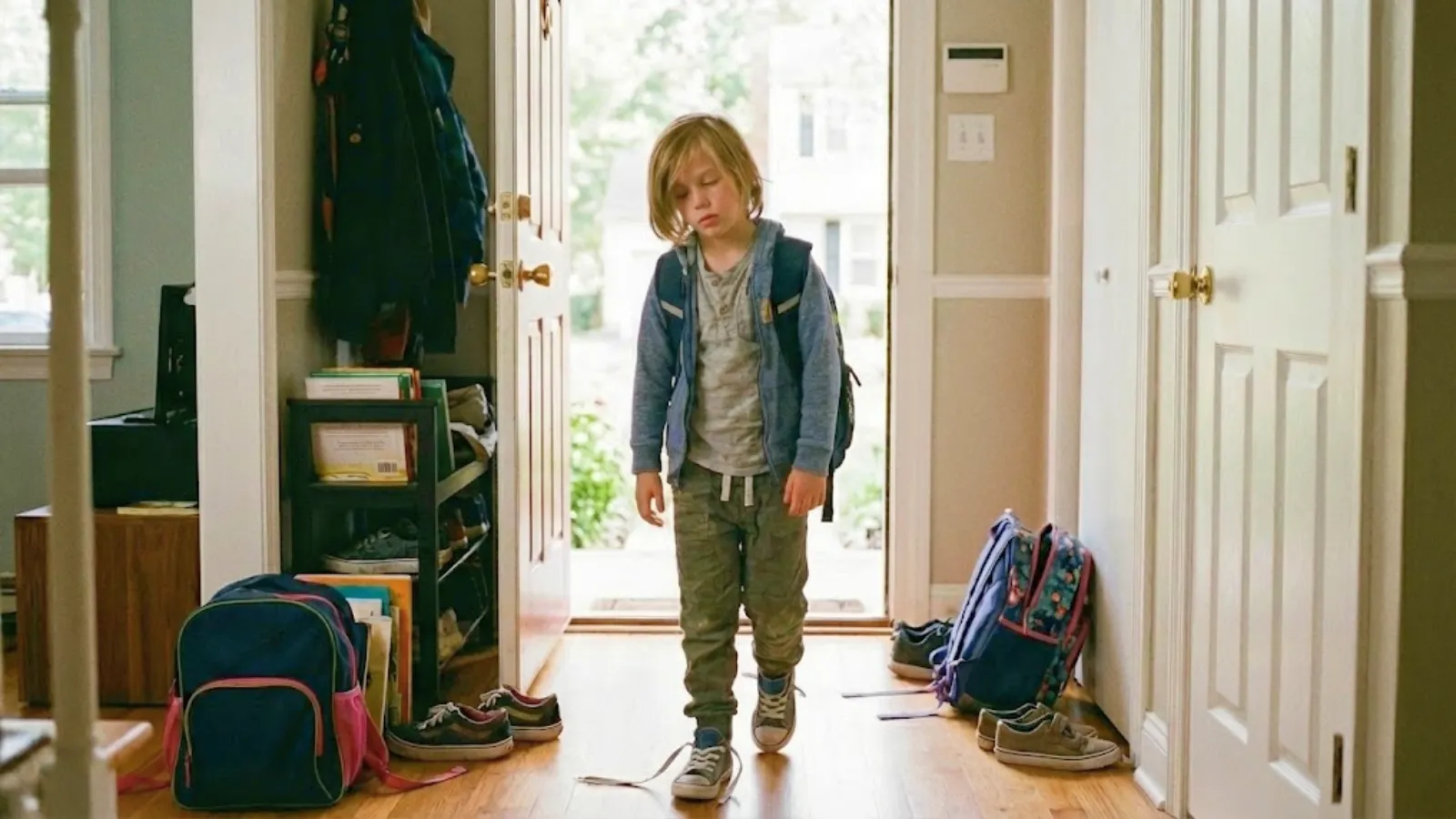
Why Your Child Does Everything Except Their Homework
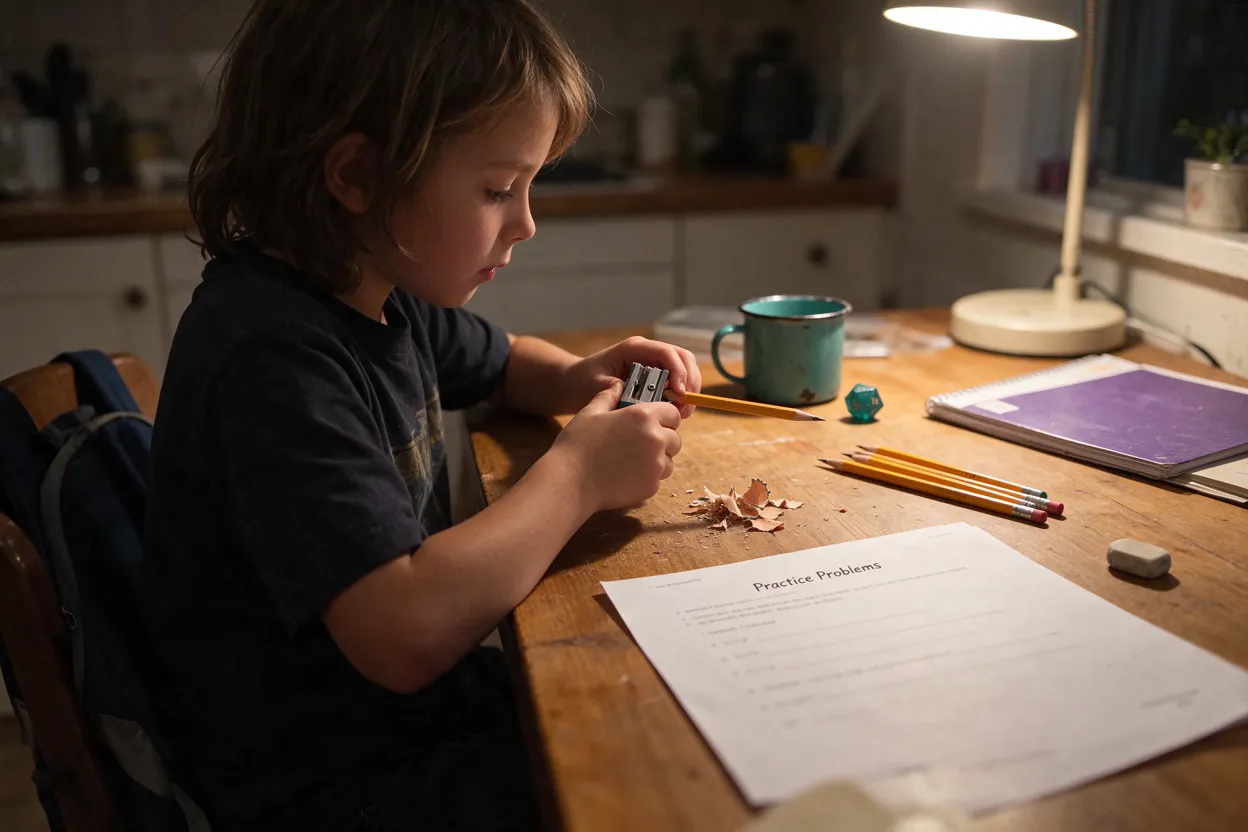
It is eight at night and the worksheet is on the table. Your kid has sharpened every pencil in the house, reorganized their backpack, fed the dog for the second time, and started a conversation about whether octopuses are smarter than dogs. You’ve asked three times. In your soul you feel like they are stalling on purpose, and plenty of people will tell you that’s exactly what it is.
It isn’t.
What procrasti-tasking looks like in a child
Procrasti-tasking is doing literally anything else other than the thing that needs doing. In kids it often looks like the behavior you’d normally love to see: tidying a room, helping with dinner, drawing, a sudden deep interest in the junk drawer. That is why it throws parents so badly. It’s hard to be angry at a kid who is cleaning their room, and harder to explain why you are.
Why it isn’t defiance
Starting is an executive function skill, and for a child with ADHD it is one of the shakiest. A worksheet doesn’t come with a first step. It comes with a page of problems and a vague expectation, and a brain that can’t see where the door is will go find a room that has one.
Then there is interest. Attention in an ADHD brain follows interest, novelty and urgency, and homework at eight p.m. has none of the three. The octopus conversation has all of them.
Underneath that, the homework often carries a feeling. Being wrong, being slow, being told again that they aren’t trying. Sharpening a pencil takes the feeling away for a few minutes. Your child is not choosing the pencil over you. They are choosing relief, and a pencil is the nearest relief available.
Time works against them too. Bedtime feels a long way off right up until it doesn’t.
Which part are they dodging
I know this from the inside. I dread laundry, and for a long time I thought the whole job was the problem. When I took it apart, washing, drying, sorting and putting away were all fine. Folding and hanging were the problem, and those two steps were enough to make me avoid everything else.
Your child is probably doing the same thing. They aren’t dodging homework. They’re dodging one piece of it: copying out the problems, the writing part, the one subject they feel behind in. Some are dodging uncertainty, because they aren’t sure what the teacher wants or where to begin. Some are dodging being wrong, and won’t write the first answer because it might not be perfect. A child can’t tell you which one it is, because they can’t see the pieces yet. You can help them take it apart.
If your child is AuDHD, the uncertainty piece is often bigger. A prompt like write about your weekend has no edges, and not knowing what a good answer looks like can stop them before they begin. Going from a game to the table is a switch with a cost of its own, and the thing they do instead is often a favorite interest with a pull of its own. Sometimes the other task is the one thing in the room that makes sense. A finished example, or a clear count of how many problems make done, takes some of the guessing out.
Why nagging and consequences make it worse
When the avoidance is driven by a bad feeling, more pressure adds more of the bad feeling. Nagging raises the cost of starting, and consequences punish a symptom without building the missing skill. I’ve written about why traditional consequences fail neurodivergent kids, and this is a clear example of it.
What helps a child start
Start by finding the piece. Ask which part is the worst, and take the answer seriously even when it sounds small. A piece they can’t stand isn’t a character flaw, and there are three ways to deal with it. You can mitigate it, by sitting beside them or clearing up whatever they’re unsure about. You can delegate it, by writing that part down while they say the answer out loud, or by asking the teacher whether another format would work. Or you can eliminate it, because the piece may not be needed to show they understand the material.
Make the first step visible and small. One problem on its own sheet, or one sentence of the essay, instead of a whole page staring back. Decide the first step with your child so it belongs to them, and put a short timer on it so there’s an end in sight.
Sit nearby for the first few minutes. Being there while they begin does the same job body doubling does for adults, and you can leave once they’re moving.
Let them choose where to start. A small choice gives the task a handle, and kids who are dodging often have a strong opinion about which part is the worst.
Treat the dodge as what comes after, not as the competition. The kid who loves drawing gets the drawing when the first chunk is done. When it’s allowed to be the reward, it stops being the escape.
And look at why it’s hard. If the work is beyond a skill they haven’t built yet, the dodge will keep coming back no matter what you do at the table, which is part of why pills don’t teach skills and neither do consequences. If it happens every night with every subject, tell the school. That pattern is useful information for a 504 plan or IEP conversation.
Your child is not choosing the pencil sharpener over you
Something about the task makes it hard to begin, and starting is a skill they’re still building. You can stop counting this as disrespect. You can help build the bridge instead.
I coach parents of neurodivergent kids one on one, and the first call is free. Tell me what’s going on at home, and let’s see how I can help.