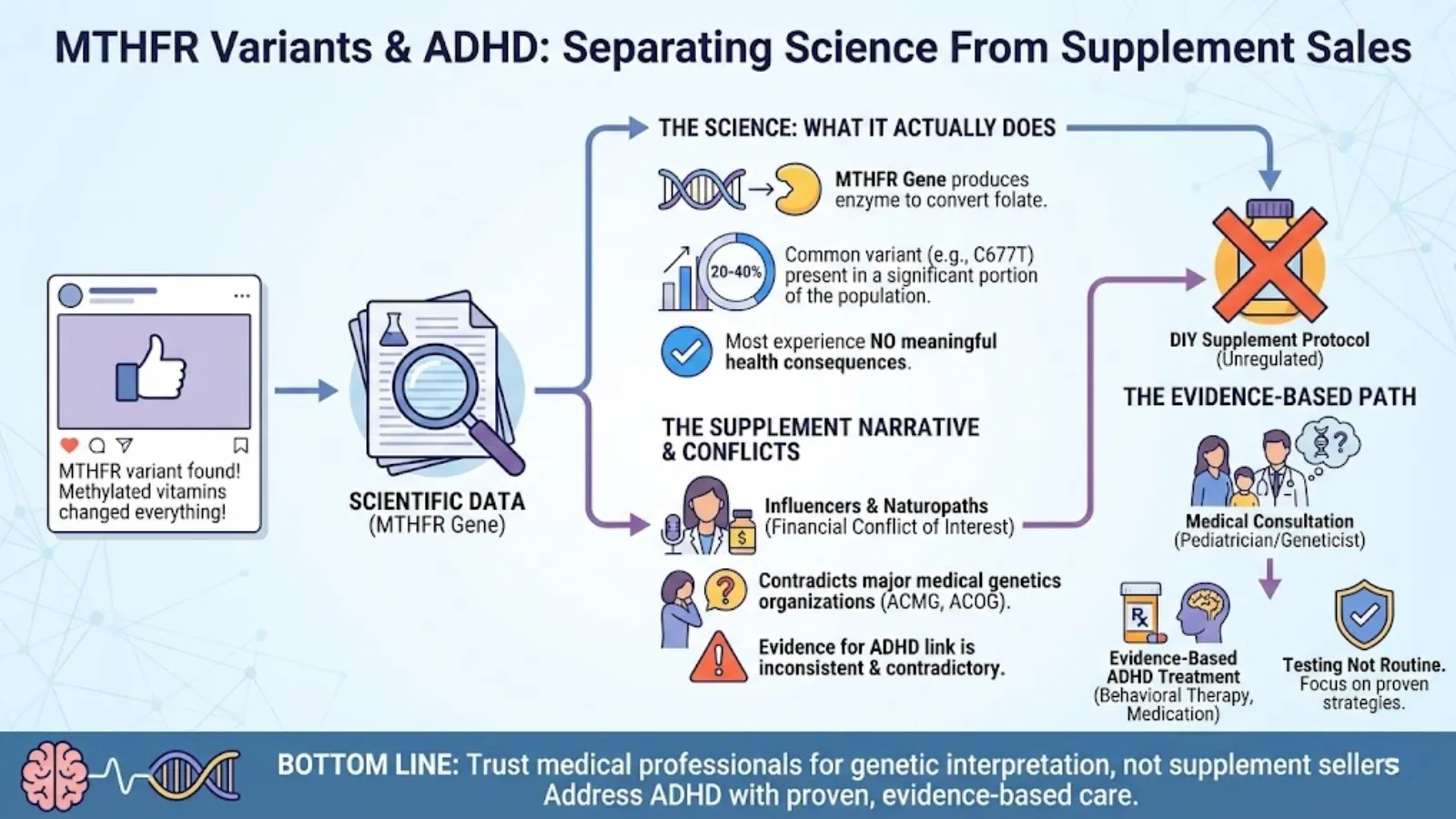
MTHFR Gene Variants and ADHD: Separating Science From Supplement Sales
What the MTHFR gene actually does, what research shows about MTHFR and ADHD, who profits from the supplement pitch, and what to ask your child's doctor instead.
Sometimes, when I say things that are particularly useful I throw them in here. One of my favorite things to do is write, and there's a lot of useful information in here.
Psychoeducation and learning how your, your child's, or your partner's brain works is the first step to moving forward.
What the MTHFR gene actually does, what research shows about MTHFR and ADHD, who profits from the supplement pitch, and what to ask your child's doctor instead.
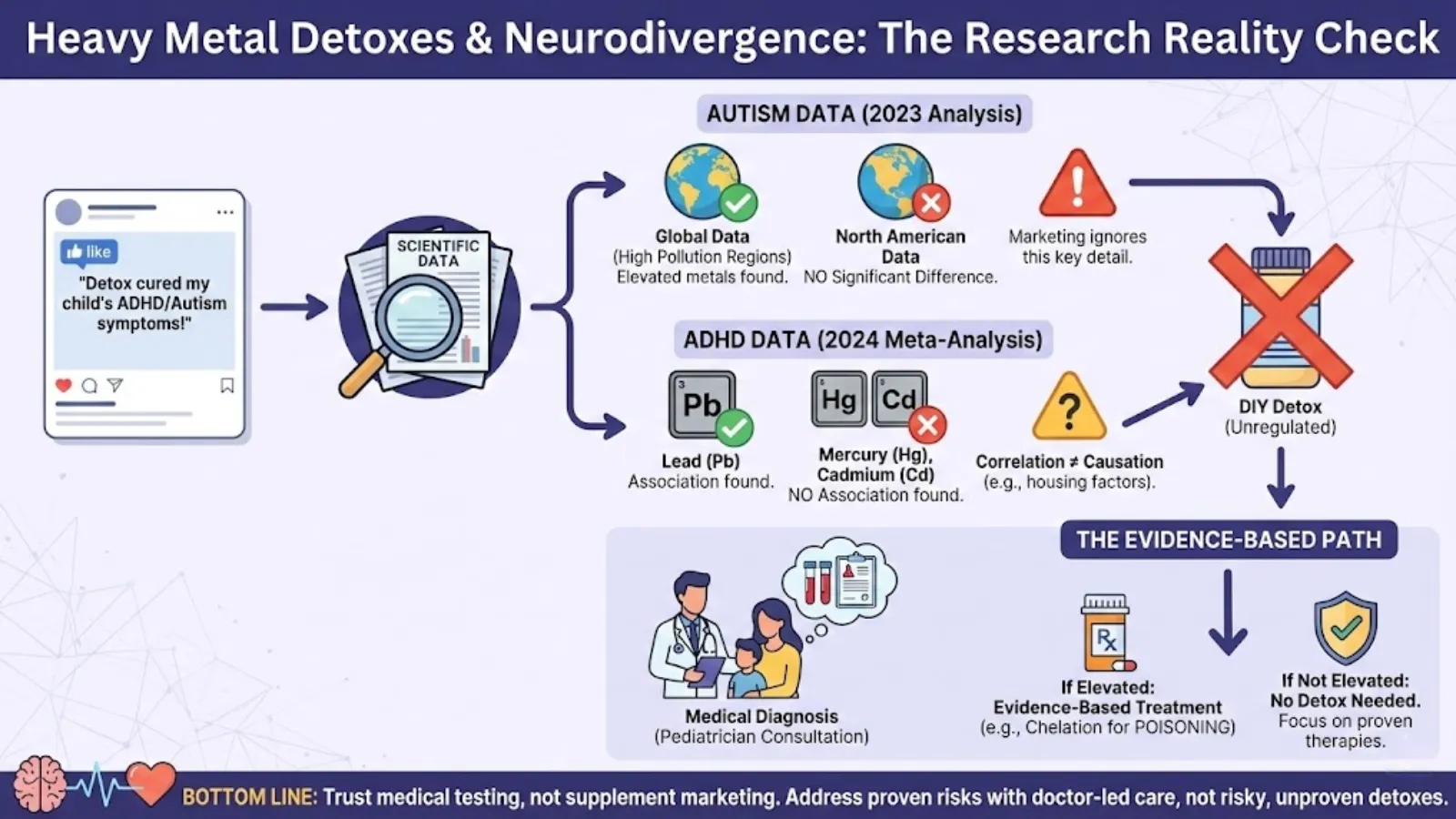
What studies on heavy metals in ADHD and Autism actually found, why detox supplements don't follow from them, the real risks, and what to do if you're worried.
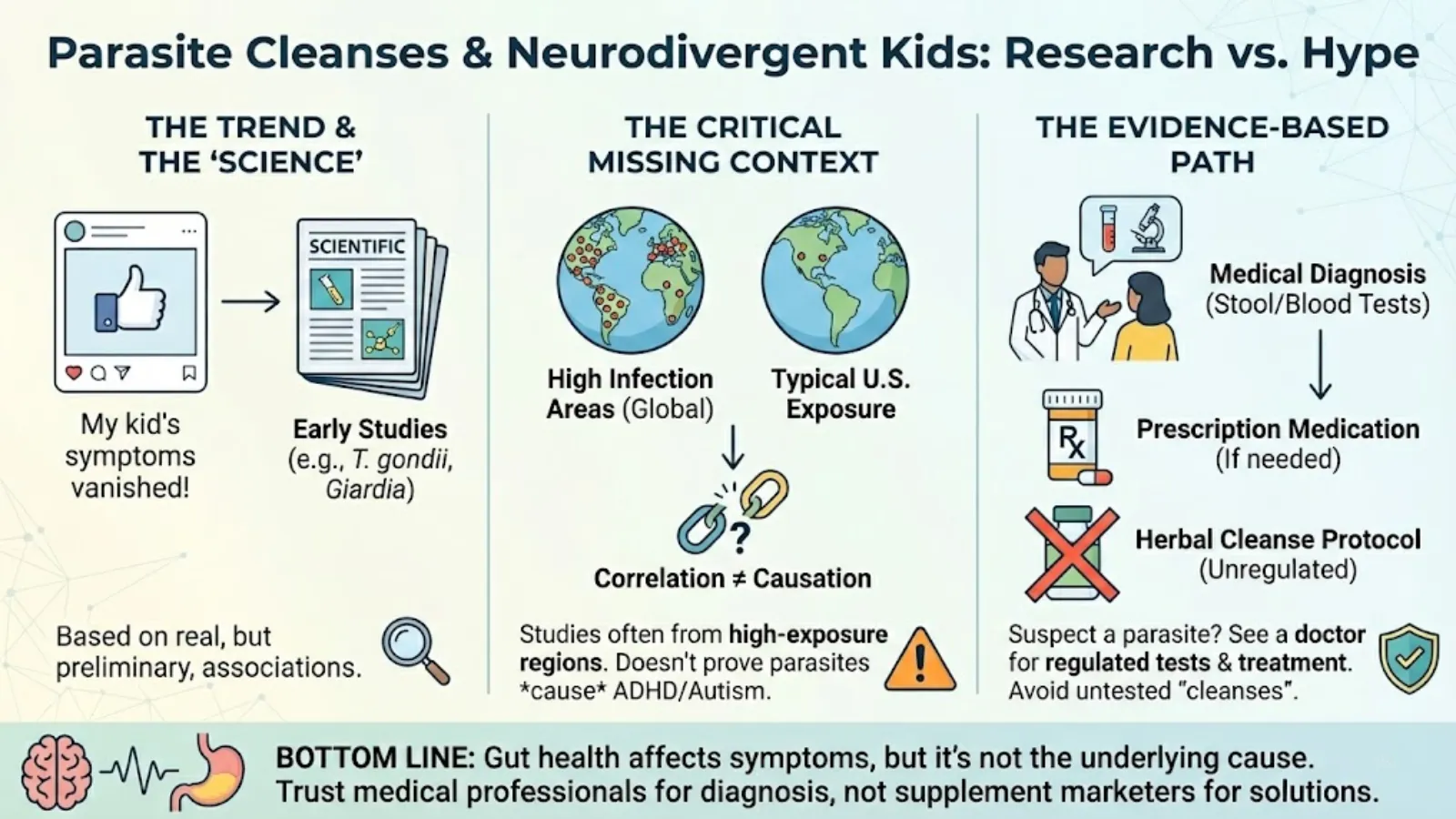
Parasite cleanses are sold as a fix for ADHD and Autism. Here's what the studies actually found, why the context matters, and what to do if you're worried.

Burnout, PDA, and ODD can look alike when your child refuses everything, but each one needs a different approach. Learn how to tell them apart and what helps.
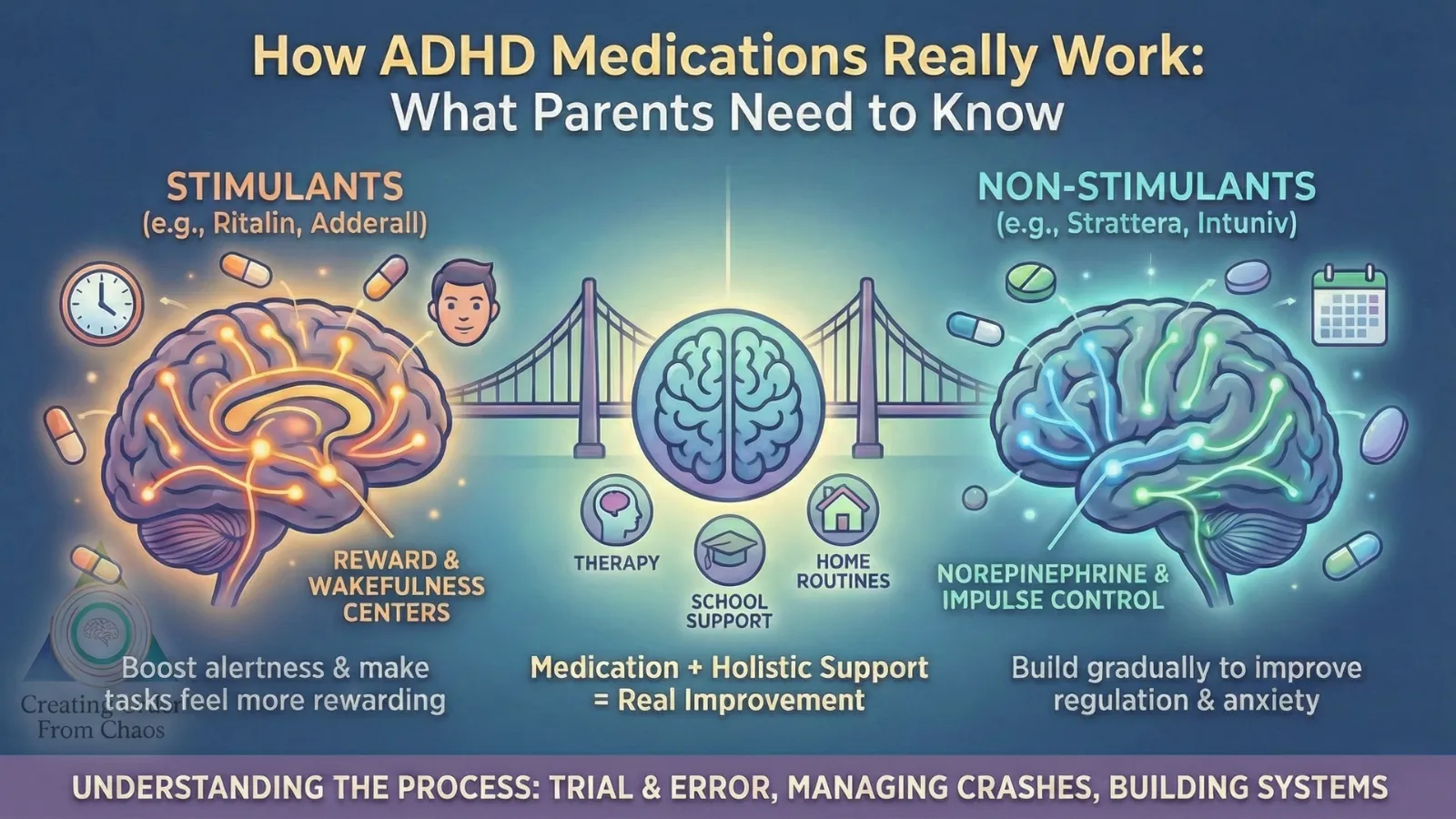
How stimulants and non-stimulants work, when kids start them, what a medication trial looks like, how to handle crashes, and why meds are only the start.

A 2024 study found ADHD stimulants act on reward and wakefulness, not attention. Learn what that means for your child and why sleep matters just as much.

Your child holds it together at school and falls apart at home. Learn why after-school restraint collapse happens and what neurodivergent kids need at the door.

Medication is the foundation, not the whole plan. Learn what therapy, parent coaching, and your own support add, and how the pieces work together for your kid.

What looks like disrespect is often dysregulation or a behavioral disorder. See how ADHD, Autism, PDA, and ODD shape behavior and which parenting styles help.
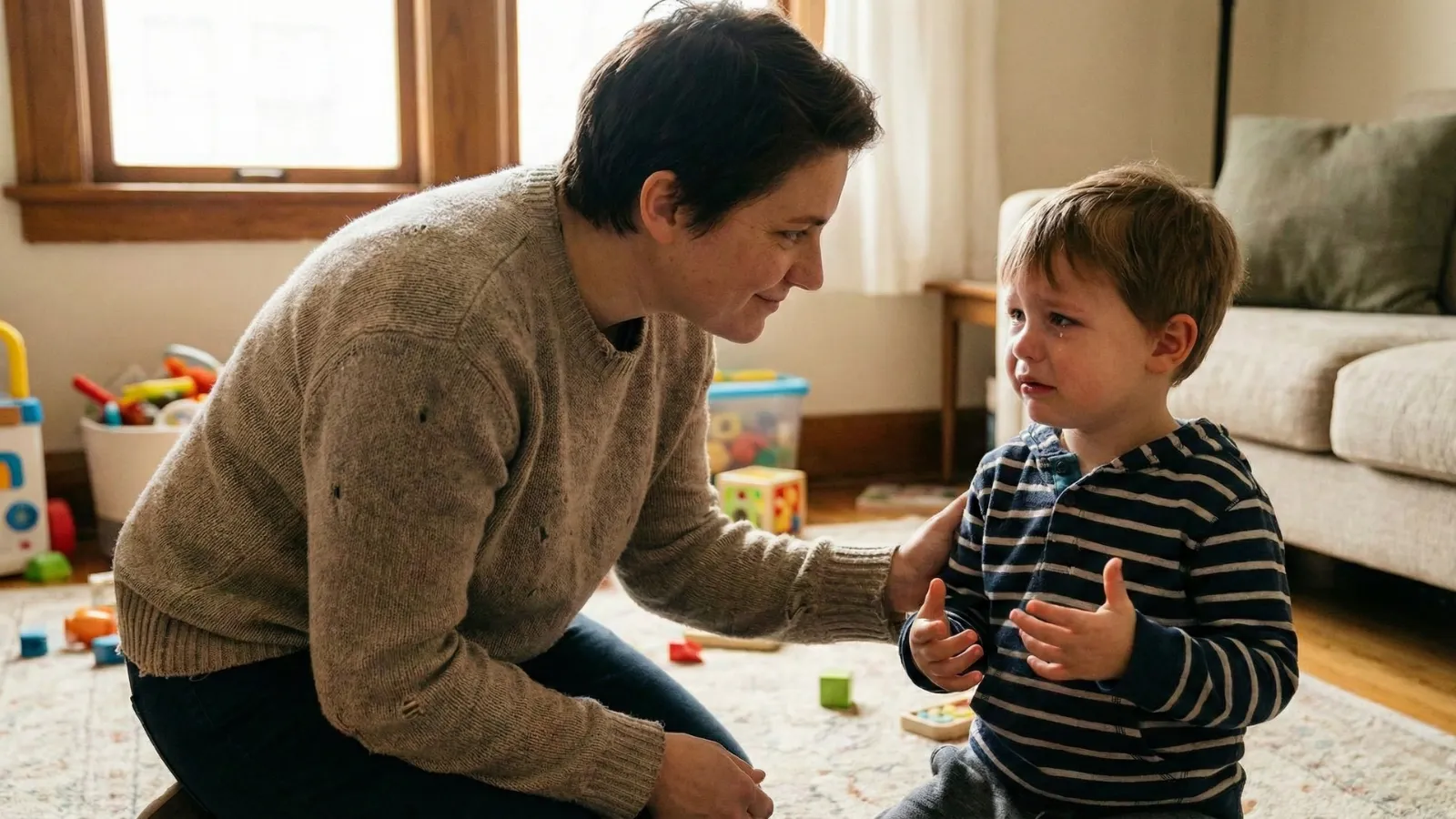
Strict parenting often backfires with ADHD. Learn how medication, therapy, coaching, and lifestyle support work together, and what to know about addiction risk.

ADHD medication helps your child focus, but it doesn't build skills. Learn where the real bottleneck is and what support turns better focus into real progress.

Up to 80% of neurodivergent kids struggle with sleep. Learn how ADHD, Autism, and AuDHD disrupt it, the trouble with melatonin, and what helps your child rest.

Your child's meltdowns aren't behavior problems. Learn what happens in their brain during a meltdown, how co-regulation helps, and how to spot the early signs.

Autism existed long before Tylenol. What the research on acetaminophen in pregnancy shows, why Autism diagnoses are rising, and the harm fearmongering does.

Consequences often fail neurodivergent kids because their brains handle time and cause and effect differently. The CARE framework shows what teaches instead.

A stage-by-stage guide to building independence in ADHD and Autistic kids from age 4 to adulthood, with ways to teach self-advocacy and problem-solving.

Coddling a neurodivergent child can feel like support, but it can build helplessness and explosive behavior. Learn how to build independence with support.

Screen time isn't all good or all bad. Learn age-appropriate limits, how to curate safe content, and how to use screens to support routines and family time.
CBD is marketed to parents of ADHD and Autistic kids, but many products are mislabeled or contaminated. Learn the risks for developing brains and what works.

Omega-3, magnesium, saffron, methylfolate, and melatonin: what the research says about popular ADHD supplements, when testing helps, and what works better.
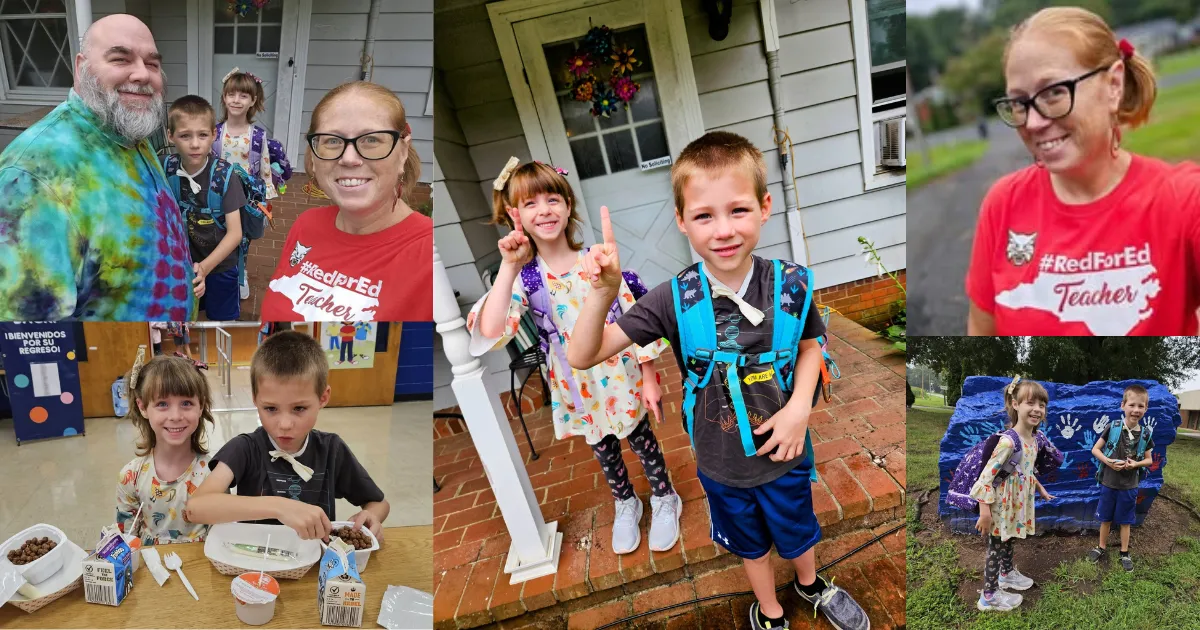
The morning, after-school, and bedtime routines that finally worked for our ADHD kids, what to do when a routine breaks down, and why predictable beats perfect.
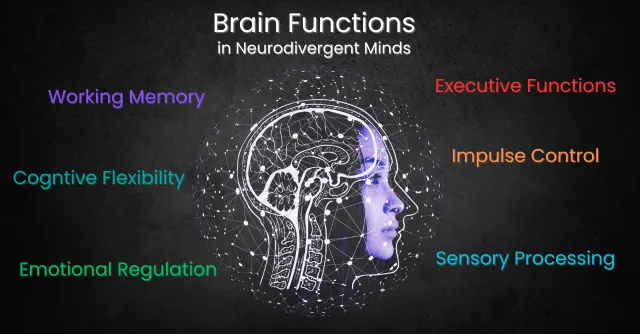
Executive function in ADHD and Autistic kids can run years behind their age. Learn why "they should know better" fails and how to build skills that last.

Research shows spanking harms children, and ADHD and Autistic kids are more vulnerable to its effects. Learn why fear doesn't teach and what to do instead.

Why eating is hard for ADHD and Autistic kids, how to spot ARFID and feeding disorders, why pressure backfires, and what helps your child eat more foods.

Fidgeting and stimming help ADHD and Autistic kids regulate. Learn the difference between the two, when to step in, and how to support them at home and school.

What a non-medication path for ADHD takes: parent training first, movement, nutrition, the few supplements with evidence, and therapy that supports the family.

What to expect when your child starts ADHD medication: common options, side effects and when they fade, what progress looks like, and why skills still take work.

ADHD and Autism are highly heritable. Learn what the genetics show, why they often show up together, why it isn't about blame, and what to do with that info.
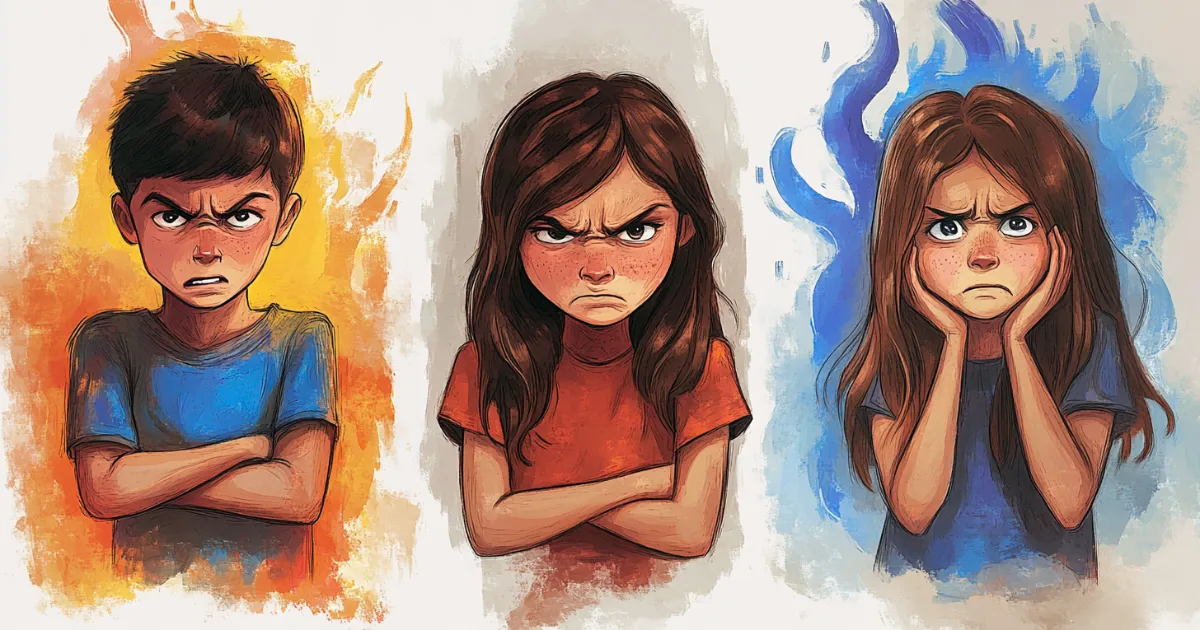
Why ADHD and Autistic kids have bigger emotional reactions at every age, from toddler meltdowns to teen identity struggles, and how you can help them regulate.

The early signs of ADHD and Autism in children, how to get a diagnosis, where parent training and therapy fit, and how to find the right specialists.

Some signs of ADHD and Autism in young kids overlap with nutritional deficiencies. Learn how to tell them apart and which early interventions help either way.

The challenges ADHD and Autistic entrepreneurs face, and how the right systems, planning, and support help you build a business that works with your brain.

Raising ADHD and Autistic kids can wear you down. Learn to recognize parent burnout, recover from it, and build the support that keeps it from coming back.

Parent training is the recommended first step in treating ADHD in young children. Learn what it involves, why starting early matters, and where medication fits.

After an ADHD diagnosis in adulthood, how to understand your brain, navigate care, align your life with your values and strengths, and build a support network.
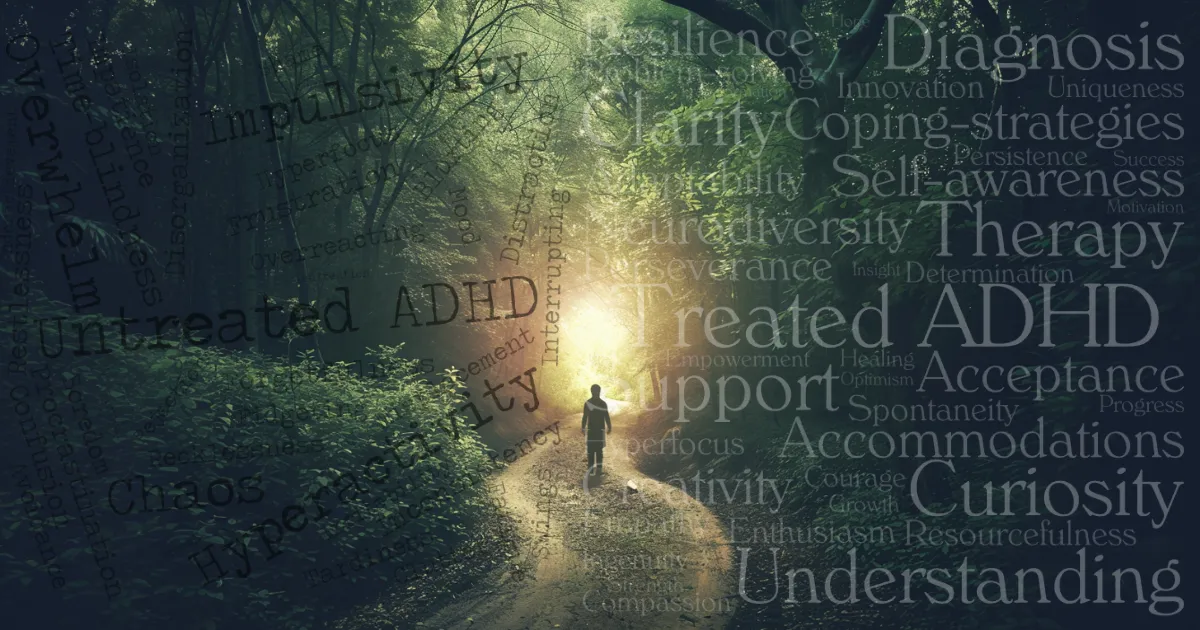
How adults with ADHD can approach diagnosis, talk with ADHD-informed psychiatrists, find trauma-informed therapists, and choose lifestyle changes that help.

What Dr. Bill Dodson taught me about ADHD and interest, why our brains aren't broken, and why calling ADHD a superpower can backfire on those who struggle.

The negative voice behind imposter syndrome isn't yours. It was put there by others. Learn where it comes from and how adults with ADHD can quiet it for good.

How adults with ADHD can figure out what accommodations they need, decide whether to disclose, and reframe neurodivergence at work as an asset, not a liability.

How adults with ADHD can build a life around their values and strengths, set standards that fit their abilities, learn from failure, and use INCUP motivation.

How boundaries, exercise, sleep, therapy, and self-compassion help adults manage ADHD, and why these basics are easier said than done even for a coach.

Body doubling means working with another person present, in person or online. Learn why it helps adults with ADHD start tasks, stay focused, and take breaks.
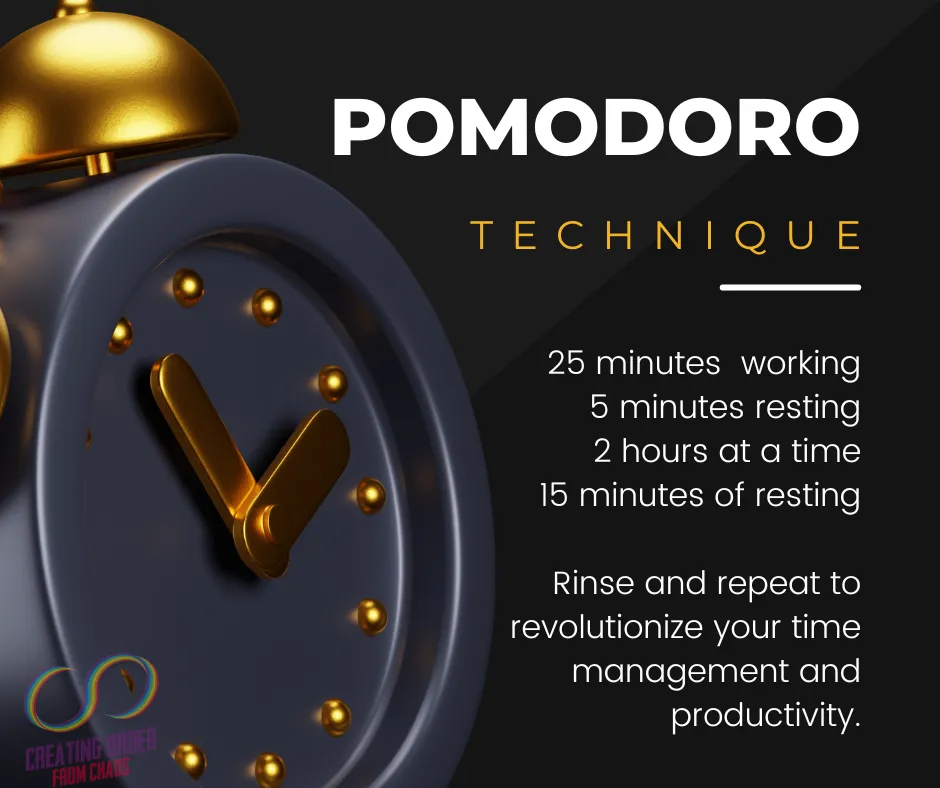
How the Pomodoro Technique helps adults with ADHD beat time blindness and distraction: work in timed blocks, take real breaks, and pair it with body doubling.

Self-advocacy means telling people what you deal with and what you need. Learn how it helps at home and work, eases RSD, and why boundaries and rest matter.
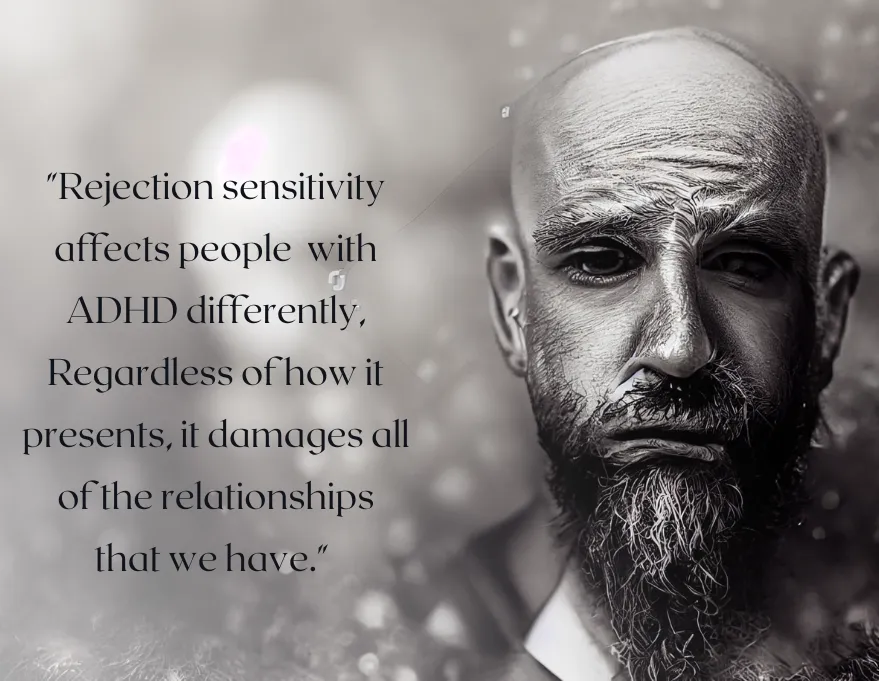
Rejection sensitive dysphoria is intense emotional pain from perceived rejection. Learn why ADHD brains react this way, how it shows up, and how to manage it.

Why adults with ADHD are prone to imposter syndrome, how it shows up at work and at home, and how therapy, coaching, and support help you fight back against it.

How knowing your needs and setting firm boundaries helped me find the right partner, and what adults with ADHD can bring to dating and relationships.

If your life has always felt chaotic, undiagnosed ADHD may be why. Learn how to get a diagnosis and what support helps adults with ADHD move forward.

Twelve practical ways adults with ADHD can connect, make friends, and keep them, from finding your tribe and backing up your memory to ditching perfectionism.
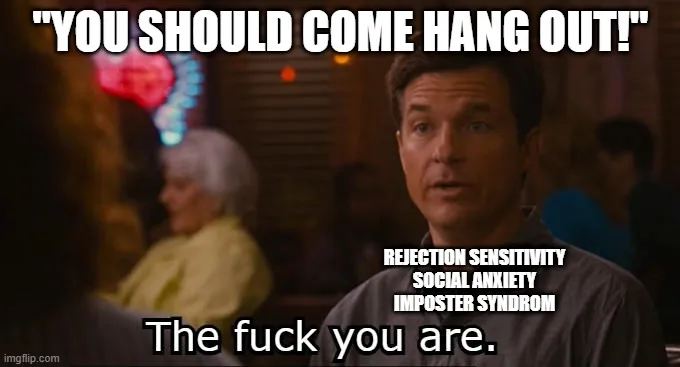
Why adults with ADHD struggle to keep friends, why isolation is dangerous for your health, and practical first steps to reconnect and build new friendships.
What rejection sensitive dysphoria and imposter syndrome are, how your ADHD brain lies to you, and how self-discovery and affirmations help you fight back.
Adults with ADHD are told they're broken. The real failure is in schools, workplaces, and a society that won't accommodate neurodivergent brains, not in you.